OpenAI’s scientific-discovery announcement: find the research and its limits
An introduction to the source document behind Luke’s Short, with links to the original research announcement.

 Watch the original video ↗
Read the source behind the Short
The Short discusses OpenAI’s report of results in mathematics, computer science and physics. The original announcement is linked below so you can inspect the claimed results and the accompanying research materials.
OpenAI describes different release approaches for the three areas, involving external academic communities. The company’s announcement and a full independent assessment of a result are different forms of evidence.
Follow up on a research claim
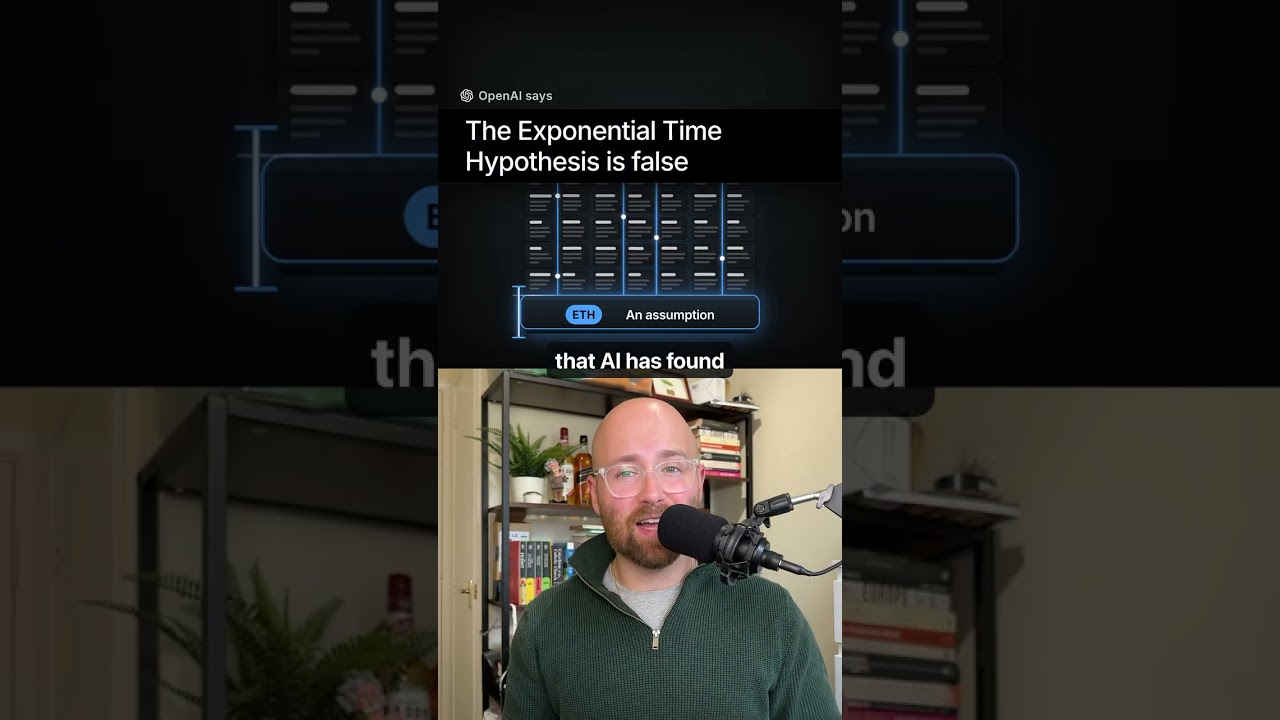
For the computer-science result, look for the Exponential Time Hypothesis section and the linked proof materials. Avoid turning a theoretical claim into a promise about practical software speed or a resolution of every related open problem.
- Open the original announcement.
- Read the section for the field you care about.
- Follow the linked manuscripts or formal proof artifacts.
- Check what external examination is described and what remains to be understood.
The takeaway
Use the Short as a starting point, then read the original research materials and the scope of the claim.
About this article and its sources
Companion prepared 31 October 2026 from the exact published YouTube description and chapter markers, with original resource links. The final video was not independently watched or transcribed for this article, and the current product was not retested. Statements about demonstrated results are attributed to the published video. Current prices, interface details and availability can change.